On a tile roof, the main gap is under the bottom row of tiles. A metal strip called bird stop (or eave closure) is made to close it, and it's often missing, damaged, or cut. Replace it with metal matched to your tile shape, then screen vents and plumbing stacks and trim trees off the roof.
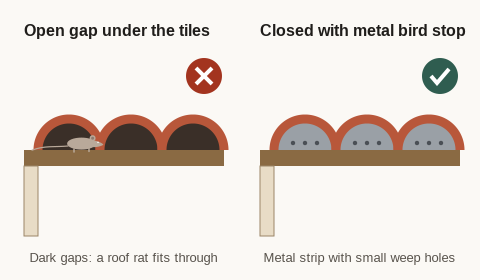
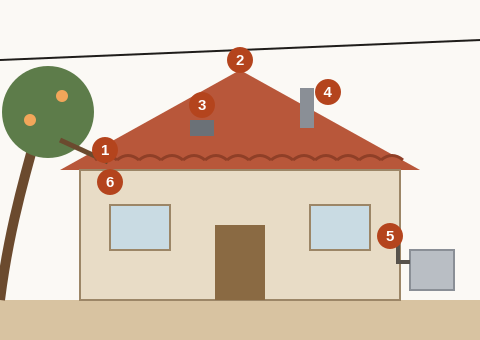
- Look at the bottom row of tiles. From a ladder or with binoculars, check the eaves. On curved tile, the space under the first row should be closed by a metal strip called bird stop or eave closure.
- Find missing or damaged bird stop. Look for gaps, bent or rusted metal, and holes cut out for drainage. Any gap there is a highway into the roof.
- Check the ridge and hip ends. Open ends at the top and corners of the roof are another common way in.
- Check roof vents and pipes. Screen vents with metal mesh and screen the plumbing stacks.
- Close gaps with metal. Replace missing bird stop with metal made for your tile shape. Use metal mesh, not foam alone, which rats chew through.
- Trim back trees. Keep branches and palms off the roof so rats can't reach it.
Do it yourself or hire it out?
Walking on tile can crack it, and roof work is a fall risk. Most people hire this part. Ask for a written list of every opening sealed, what was used, and a warranty. See what it usually costs.
Questions
What is bird stop on a tile roof?
A metal strip installed at the eaves of a tile roof that closes the gap under the first row of tiles, keeping out birds, rodents and insects.
Can roof rats get under roof tiles?
Yes. Gaps at the eaves, ridge ends and around vents let them get under the tiles and into the attic.
Will foam keep roof rats out?
Not by itself. Rats chew through foam. Use metal mesh or metal closures.
Sources
- U.S. Dept. of Energy Building America Solution Center, Reduce Pest Intrusion
- Maricopa County Vector Control, Roof Rats FAQ
- University of Arizona Cooperative Extension, How to Identify and Discourage Roof Rats (2024)
Checked 2026-11-24. Rules and amounts change, so confirm with the agency before you rely on them.